Injuries and Healing
How beginners should think about injuries, treatment, recovery, and why healing is a campaign system in The Scroll of Taiwu.
Injuries are campaign pressure
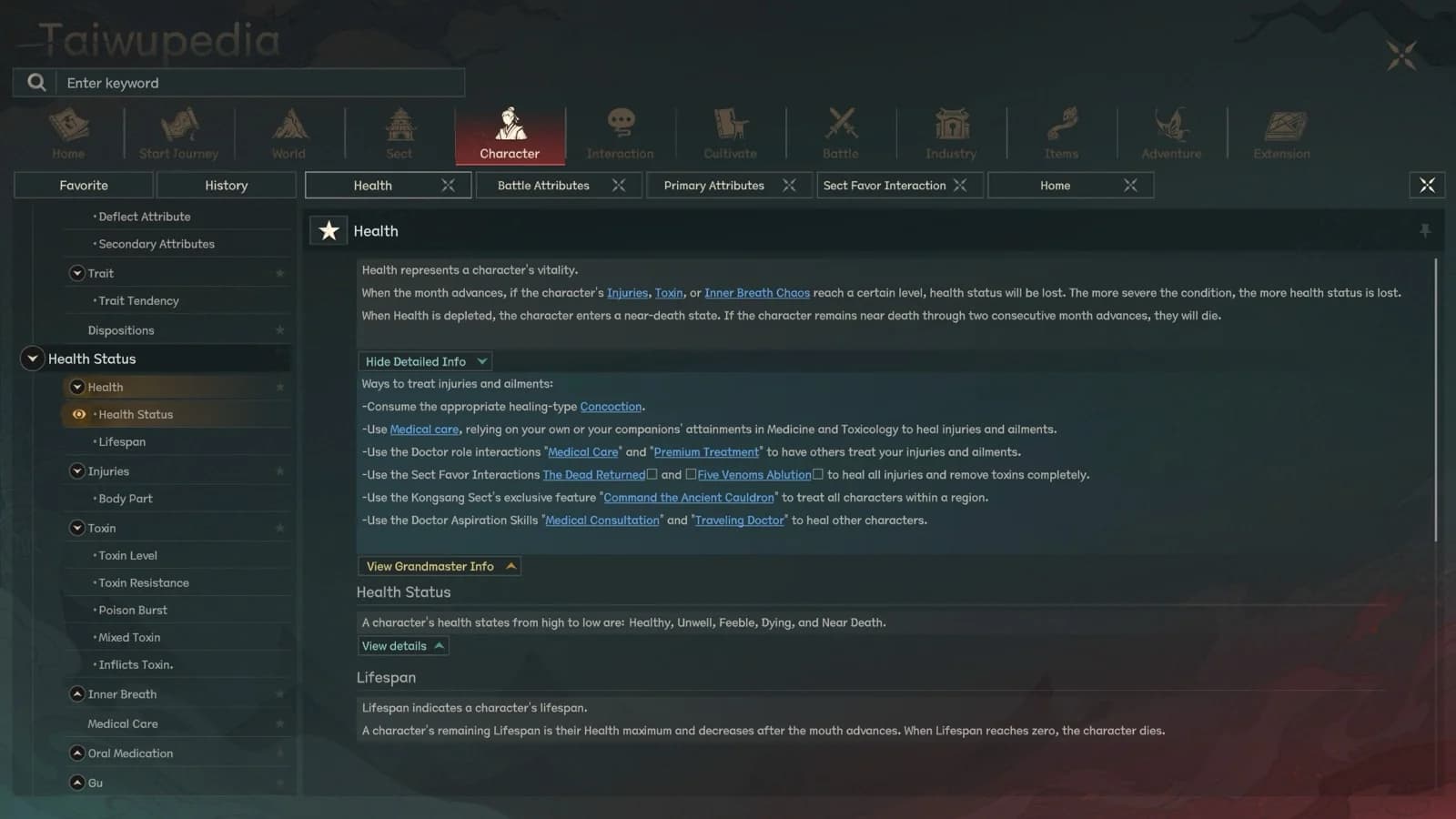
In Taiwu, an injury is not just a temporary health bar problem. It is campaign pressure. A bad fight can make the next fight worse, make travel more dangerous, and force village or medicine decisions you were trying to postpone.
This is why defensive factions and recovery tools are beginner friendly. They do not only help you win individual fights. They reduce the number of mistakes that become long-term problems.
- 伤势 / Injury: general damage state that can affect future choices.
- 内伤 / Internal injury: internal or qi-related damage pressure.
- 外伤 / External injury: physical wounds and visible body damage.
- 治疗 / Medical Care: medical handling before problems compound.
- 毒素 / Poison: status pressure that can demand preparation rather than ordinary healing.
Reading the State Changes screen after each fight
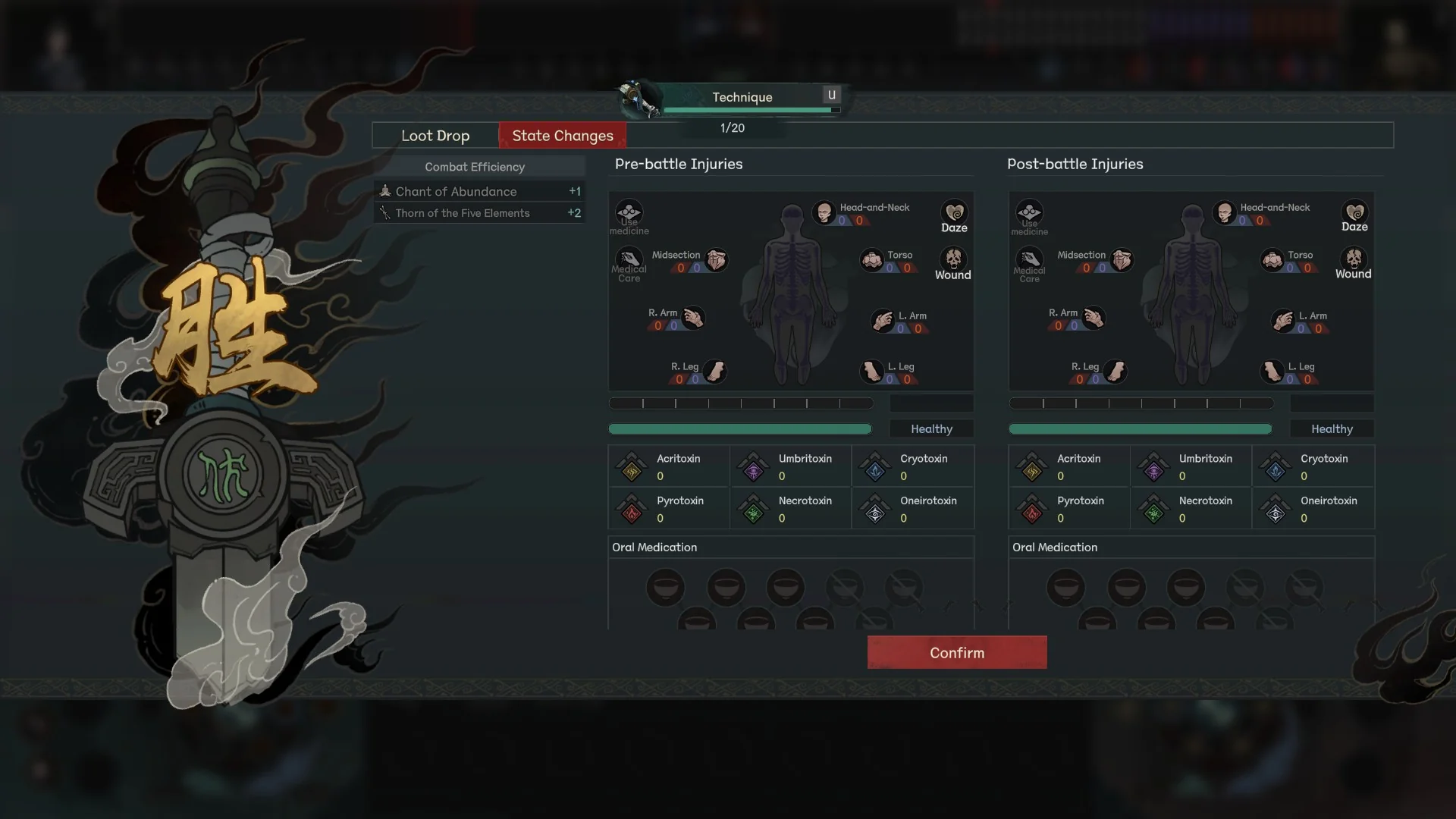
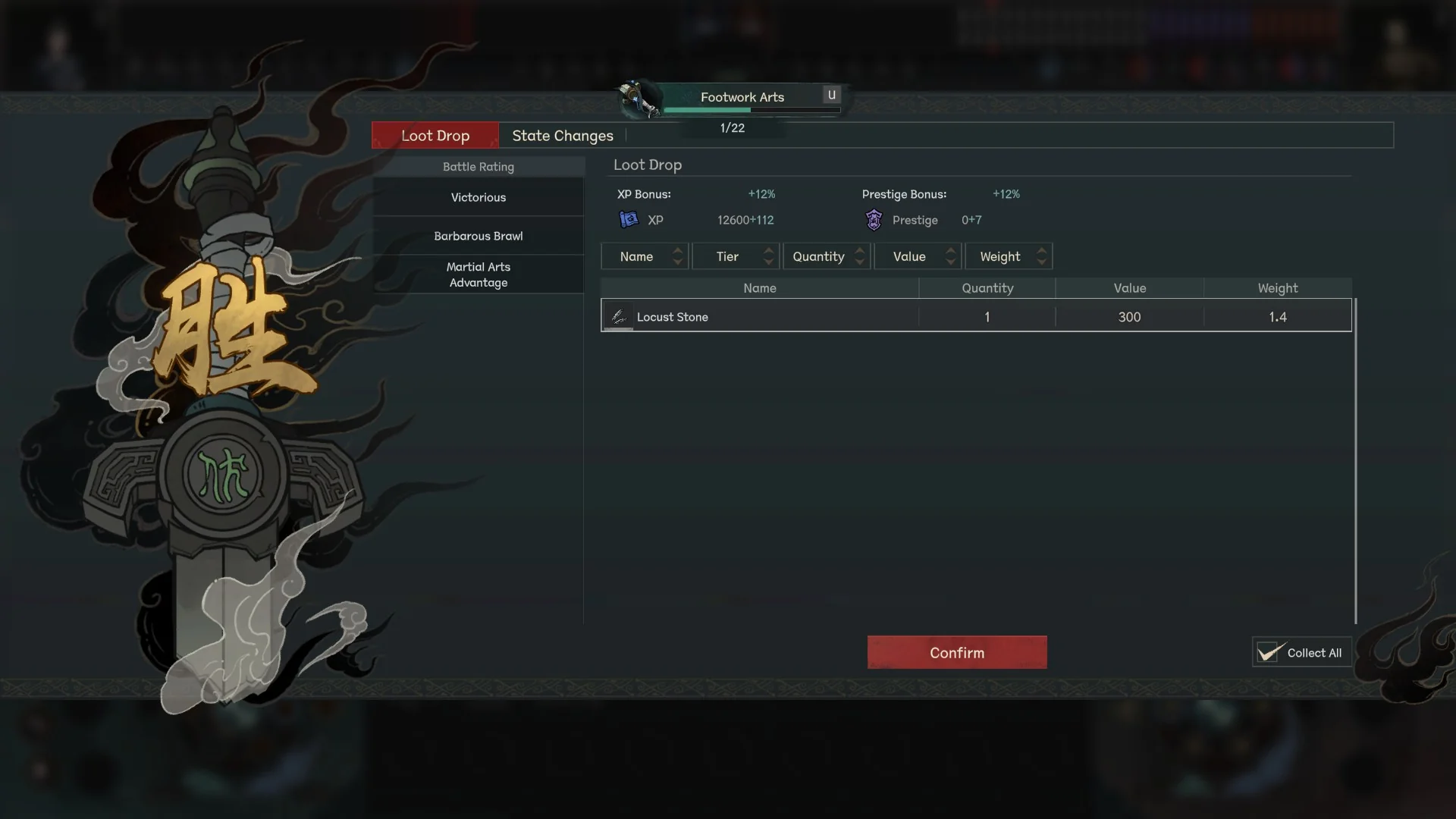
After every fight, a State Changes screen appears before you return to the world map. It has two tabs: Loot Drop (XP, Prestige, and items you collected) and State Changes (a before-and-after injury comparison).
The State Changes tab shows your Pre-battle and Post-battle injury diagrams side by side across each body part: Head-and-Neck, Torso, Midsection, Left and Right Arms, Left and Right Legs. This is where you see exactly what the fight actually cost your body. It also shows Combat Efficiency gains — how much each martial art improved from the encounter.
Check this screen after every fight, not just after bad ones. When injuries appear that were not there before the fight, treat that as feedback: something in the exchange caused that specific damage pattern.
- Loot Drop tab: XP bonus %, Prestige bonus %, and items dropped.
- State Changes tab: Pre-battle vs Post-battle injury diagram per body part.
- Combat Efficiency: how much each art grew from the fight (e.g. +2 to a practiced move).
- Daze and Wound status appear on the head/torso — these are your clearest early warning flags.
- Healthy across all body parts after a fight = no new injury pressure, continue safely.
Ask what caused the injury
The most useful healing question is not only how do I recover. Ask why the injury happened. Did you stand at the wrong range? Did the opponent's weapon punish your route? Did your internal support collapse? Did you fight while already hurt?
Once you answer that question, healing becomes part of learning combat instead of a separate chore.
- Wrong range: add or improve movement support.
- Poor defense: strengthen internal or body support.
- Bad weapon matchup: avoid forcing the same exchange repeatedly.
- Stacked injuries: stop chaining dangerous encounters.
Healing factions and recovery routes
Emei, Valley of Flowers, and Kongsang are useful for players who want injuries to become readable rather than mysterious. They are not all equally easy, but they teach you to connect fights, body states, and recovery planning.
Shaolin is also injury-friendly in a different way: it prevents many bad trades before they become treatment problems. That is why the safest beginner recommendation is often defensive rather than medical.
- Emei: flexible recovery without overwhelming complexity.
- Valley of Flowers: medicine and attrition for patient players.
- Kongsang: deeper body-system mastery, better after a learning run.
- Shaolin: prevention through durability and readable melee.
Beginner recovery rules
The simple rule is to treat injuries before they become your new baseline. If you normalize fighting while damaged, your next loss becomes harder to interpret. You will not know whether the build failed, the matchup was wrong, or you simply carried too much damage forward.
Carry treatment options, return to safety when needed, and use the village as a recovery base. The goal is not perfect safety. The goal is keeping mistakes understandable.
- Do not chain hard fights while already injured.
- Keep basic treatment options before long travel.
- Use recovery time to repair equipment and re-check your martial kit.
- If the same injury pattern repeats, update the build instead of only healing.
Related paths
FAQ
Should I ignore minor injuries?
Sometimes, but beginners should be conservative. Small problems can make later fights harder to understand.
What does the State Changes screen tell me?
It shows a before-and-after injury comparison per body part, so you can see exactly what damage the fight caused. The Combat Efficiency column also shows how much each martial art improved. Check it after every fight — not just bad ones.
Which faction is best for healing?
Valley of Flowers and Kongsang are strong medical routes, while Emei offers more beginner-friendly recovery flexibility.
Is defense better than healing?
For first runs, prevention is often easier than repair. This is why Shaolin is so beginner friendly.
What do the Battle Rating labels mean on the Loot Drop screen?
Labels like 'Victorious,' 'Barbarous Brawl,' and 'Martial Arts Advantage' each add percentage bonuses to XP and Prestige earned. Decisive wins that trigger multiple bonuses reward you significantly more than dragging out marginal fights.